


 by
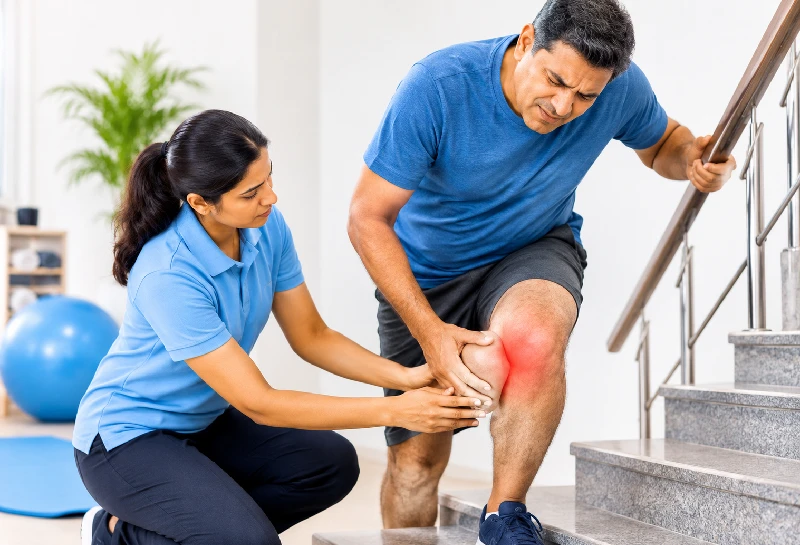
The sharp and throbbing pain when walking or climbing stairs can be devastating. Even knee pain is common in different age groups as inflammation around knees can make simple movements difficult. Knee pain while walking and climbing stairs can be caused from arthritis, injury, muscle weakness, and many others as stairs force your knee to bend deeply while bearing three to six times your body weight. Physiotherapy for knee pain will help you overcome your every obstacle and also provide knee strengthening exercises to make your life easier.
Common causes of knee pain
- Knee Osteoarthritis – It is common among middle aged and older people and involves changes in the joint cartilages and other structures that lead to stiffness, pain and painful movement. People who suffered knee injury are at risk of osteoarthritis along with those who are overweight, muscle weakness, age factor, or any family history comes under radar.
- Patellofemoral Pain Syndrome – It causes discomfort around and behind the kneecap that can be developed while repeated loading, changes in activity, or weakness in muscle around the knee. If you feel pain at the front of the knee while climbing or feeling discomfort during squat, running, jumping, or kneeling, then you are suffering from Patellofemoral Pain Syndrome.
- Tendonitis or Tendon Irritation – Irritated tendon around knees can cause severe pain while performing common activities like walking and climbing stairs. Its pain starts below the kneecap particularly during jumping, running, or repeated knee bending activities.
- Meniscus Injury – It is a tough cartilage that helps distribute load as well as shock between the thighbone and shinbone. It is caused when the knee twists during loads or heavy weight lifting. But its treatment depends upon various factors such as type of tear, patient age, the pain strength and its symptoms, and many others.
- Muscle weakness – The muscle weakness around the knee, reduced flexibility, or poor tolerance for a sudden increase in activity can cause discomfort while walking and climbing stairs.
Importance of Strengthening Exercises
Physiotherapy for Knee pain entirely targets the root cause of the problem rather than masking the discomfort. Knee strengthening exercise will benefit the muscles around the hip and knee that creates a natural muscle brace that absorbs the shocks and stabilizes the joint. Strengthening exercise helps control knee extension and cushion impact during steps and movement.
How physiotherapy can help?
Knee pain treatment by a physiotherapist always works on the core of the knee and muscles around it. They not only heal you from pain but also correct your posture and look for any further potential chances of getting hurt.
A physiotherapist will assess what usually causes pain, which movement triggers the pain, and what kind of strength, mobility or support help you feel relaxed rather than just going with the loop.
Gradually, people understand that modifying their stairs and using others’ help to make minute things possible or just going for surgery is not the only solution. They have to look for solutions that work on core problems rather than just waxing it for a while.
Exercise for knee pain
Having an active body is much better than just eating healthy. Combination of both eating healthy and exercise is the peddle of a cycle that comes along.
After your proper assessment done by a Physiotherapist, then they will share the guide for your exercise that you need to do on a daily basis to strengthen your muscles again and release the stress. Some Knee strengthening exercises are:
- Leg raise (Straight)
- Quadriceps strengthening
- Calf strengthening
- Step up exercise
- Balancing exercise
- Squats (Controlled / monitored)
- Hamstring exercise
The number of repetitions, level of resistance, and intensity of exercise is solely based on your pain level and conditions. While exercising, if you feel severe pain for a long time then it’s good to have a word with a physiotherapist rather than taking only pills.